Bathrooms are small spaces, but they work harder than almost any other room in the house. Steam, water splashes, daily use, and limited airflow all add up. Choosing the best paint for bathroom walls and ceiling is less about trends and more about how the coating performs over time.
Most homeowners come into this conversation after seeing peeling paint, mildew spots, or uneven color near the ceiling. Others are planning an update and want to avoid those issues altogether. Either way, the right approach starts with understanding how moisture, surfaces, and finishes work together, especially when cabinets are part of the scope.
Key Takeaways:
- The best paint for bathroom walls and ceilings must resist moisture, mildew, and frequent temperature changes.
- Primer choice matters just as much as paint, especially over glossy surfaces or new drywall.
- Satin and semi-gloss finishes hold up better in bathrooms than flat or matte options.
- Bathroom ceilings need moisture-resistant paint, not standard flat ceiling paint.
- Cabinets require harder, more durable coatings than walls to handle daily use and cleaning.
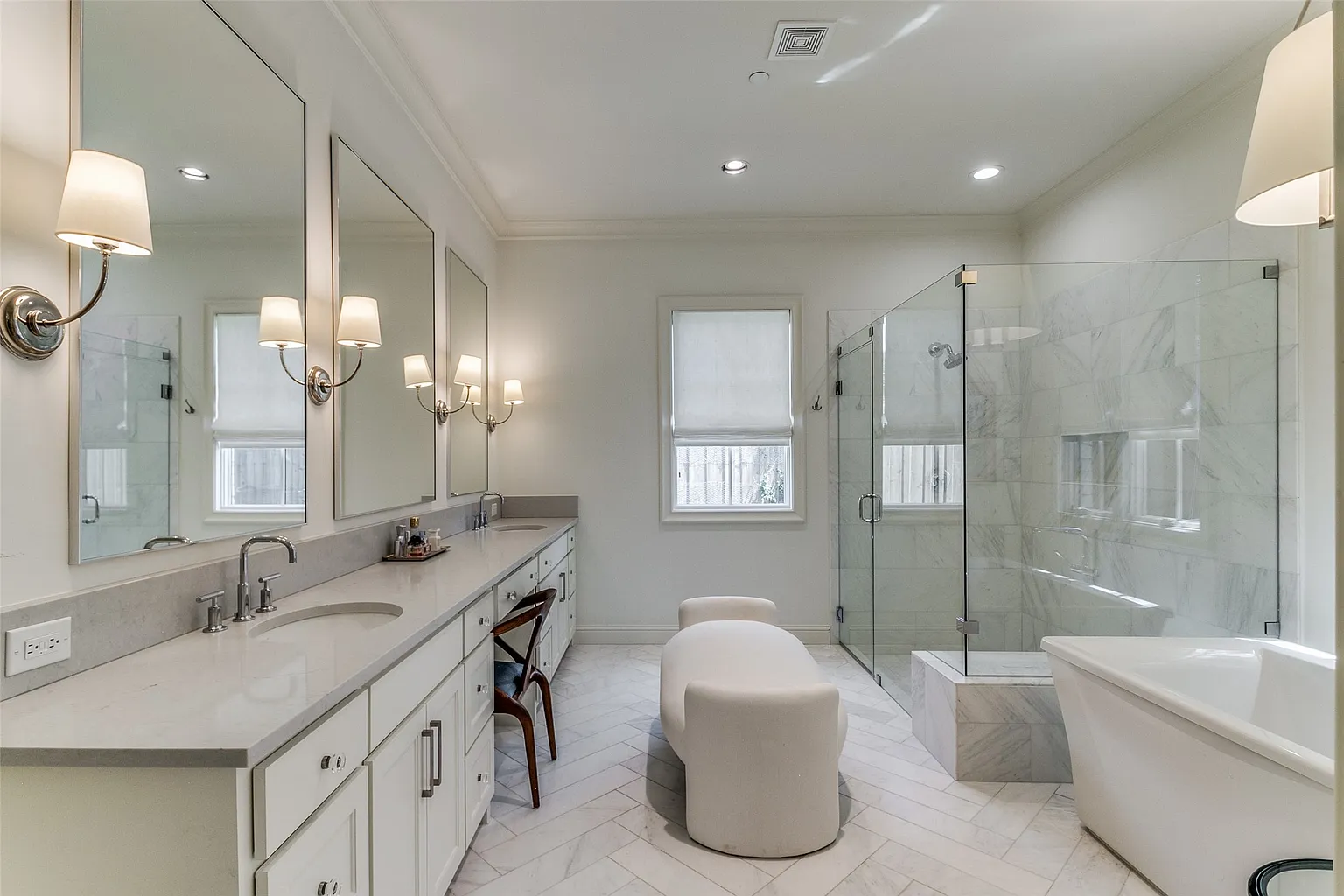
Why Bathrooms Need A Different Paint Strategy
Bathrooms are exposed to more moisture than kitchens, living rooms, or bedrooms. Hot showers create condensation that settles on walls, ceilings, trim, and cabinets. Over time, that moisture can break down weak coatings.
The best paint for bathroom walls and ceiling does three things well:
- Resists moisture absorption
- Slows mildew growth
- Stays stable through temperature swings
Paint that works great in a hallway often fails here. Bathrooms need coatings built to handle repeated humidity without softening, bubbling, or staining.
Start With The Surface Before Choosing Paint
Before talking about paint types or finishes, it helps to look at what is already on the surface. Bathrooms are rarely blank slates.
Common situations include glossy wall paint from a previous update, patched drywall, older trim with multiple coats, or cabinets with factory finishes. Each of these surfaces affects how new paint bonds.
This is where adhesion matters. Without proper surface prep and primer selection, even the best paint for bathroom walls and ceiling will struggle to perform.
Key surface factors include:
- New drywall versus previously painted walls
- Existing gloss levels
- Areas exposed to direct water or frequent wiping
Skipping this step is often why paint fails early in bathrooms.
Primer Choices That Matter In Bathrooms
Primer does more than help paint stick. In bathrooms, it creates a barrier between moisture and the surface underneath.
Bathroom And Kitchen Primers
Primers labeled for bathrooms or kitchens are designed for humid spaces. They bond well to slick surfaces and often include additives that resist mildew growth. These are common choices for walls and ceilings that have seen years of moisture exposure.
Mildew-Resistant Primers
In bathrooms with limited ventilation, mildew-resistant primers provide extra protection. These primers help slow the return of mildew once the surface is clean and dry.
Drywall Primers For New Surfaces
For new drywall, a drywall or PVA primer seals the surface evenly. This prevents uneven absorption and blotchy finish coats, especially when lighter colors are used.
Choosing the right primer sets the stage for the best paint for bathroom walls and ceiling to do its job.
Paint Base Types And How They Perform In Bathrooms
Not all paint bases behave the same in humid spaces.
Water-Based Latex Paint
Most bathroom walls and ceilings perform best with high-quality water-based latex paint. These coatings resist moisture, clean easily, and release fewer volatile organic compound emissions while drying. They also maintain color consistency over time.
Latex paint is commonly used for walls and ceilings where breathability and washability are important.
Oil-Based Coatings For Cabinets And Trim
Oil-based coatings are still used in some cabinet and trim applications due to their hardness. That said, they can yellow over time and release stronger odors. Many modern cabinet systems now rely on advanced water-based coatings that provide durability without those downsides. For cabinets, the focus shifts from breathability to hardness and cleanability.
Picking The Right Finish For Bathroom Walls
Finish choice plays a major role in durability and appearance. It also affects how light reflects and how easy the surface is to clean.
Satin Finishes
Satin is often chosen for bathroom walls because it balances moisture resistance with a softer look. It resists water better than flatter finishes and cleans more easily.
Satin can be harder to touch up evenly. Overlapping paint can show if not applied consistently. This tradeoff is worth understanding, especially when comparing satin paint vs. matte paint in humid spaces.
Semi-Gloss Finishes
Semi-gloss sheds moisture very well and stands up to frequent cleaning. It is a strong option for walls near sinks or tubs.
The downside is that it highlights surface imperfections. Uneven drywall or patched areas become more visible as sheen increases. This is why surface prep is so important.
If you are weighing finish options, understanding eggshell vs. semi-gloss paint helps clarify where each works best.
What To Avoid On Bathroom Walls
Flat and matte finishes absorb moisture more easily. They also show wear faster when wiped or cleaned. While some specialty paints claim improved durability, flatter finishes still struggle in high humidity rooms. In powder rooms with limited moisture, these finishes can sometimes work. In full bathrooms, they usually lead to early wear.
Ceiling Paint That Actually Lasts
Ceilings often take the hardest hit in bathrooms. Steam rises and settles there first.
Standard flat ceiling paint is not ideal in bathrooms with showers. Satin or semi-gloss finishes handle moisture better and slow mildew development.
- Powder rooms often do fine with satin ceilings
- Full bathrooms benefit from semi-gloss ceilings
Using the best paint for bathroom walls and ceiling means treating the ceiling with the same care as the walls, not as an afterthought.
Cabinet Paint Considerations In Bathrooms
Bathroom cabinets face daily exposure to moisture, hand oils, and cleaning products. They need a different strategy than walls.
Cabinet coatings focus on:
- Strong adhesion to slick surfaces
- Hard finishes that resist dents and scratches
- Smooth leveling for a clean appearance
This is where professional-grade systems make a difference. Cabinet paint must cure properly to avoid sticking doors or premature wear.
Color selection matters here too. If you are unsure how a shade will read under bathroom lighting, tools like a paint color visualizer can help narrow options before final decisions are made.
Color Choices And Bathroom Lighting
Bathrooms often rely on artificial lighting, which can shift how paint colors appear. Light bulbs, wall orientation, and reflective surfaces all play a role.
Lighter colors can make small bathrooms feel more open but may show shadows or uneven surfaces more easily. Darker colors can feel rich but require excellent prep and finish selection.
Color perception also changes after paint dries. Many homeowners are surprised by how shades shift, which is why understanding does paint dry darker or lighter helps set expectations.
A Practical Way To Choose The Best Paint
Rather than starting with color, start with function.
- Identify the surface condition
- Select the right primer for that surface
- Choose a paint base suited for moisture
- Pick a finish that balances durability and appearance
- Finalize color after finish is selected
How Professional Bathroom Painting Gets Better Results
Bathrooms leave little room for error. Tight spaces, moisture, and multiple surface types all require a controlled process.
At Highland Painting, our approach focuses on long-term performance, not quick fixes.
Our process includes:
- Surface evaluation and moisture assessment
- Proper cleaning and surface preparation
- Primer selection based on surface and humidity
- Finish selection tailored to walls, ceilings, and cabinets
- Clean application for consistent sheen and durability
This approach is why homeowners looking for reliable painters in Frisco, TX often prioritize experience over shortcuts.
Final Thoughts On Bathroom Paint That Lasts
Choosing the best paint for bathroom walls and ceiling is about more than picking a color you like. It involves understanding moisture, surface conditions, finishes, and how cabinets fit into the picture. Satin and semi-gloss finishes handle humidity better, ceilings deserve moisture-resistant coatings, and cabinets require durable systems built for frequent use.
When each surface is treated correctly, the space stays cleaner, brighter, and easier to maintain over time. Bathrooms that are painted with the right materials simply age better. That is the difference a thoughtful process makes.
If you are planning a bathroom update in Frisco, Plano, Fort Worth, or the surrounding areas, Highland Painting can walk you through the right approach for your space.
Call us at 469-642-0972 for a FREE estimate and a clear plan that focuses on durability, not guesswork.