If you’ve been thinking about freshening up a room in your Celina, TX home, you’ve probably wondered how to paint over wallpaper without destroying your walls. It’s a common worry, especially in older homes where wallpaper is still tucked behind trim and furniture. The good news is that painting over wallpaper works well when the right steps are followed and the surface is prepped with care.
Many homeowners choose this route because it avoids unnecessary damage to drywall. Wallpaper removal can lead to torn paper, gouges, and uneven texture. A careful painting process often gives you the clean, updated look you want with far less hassle.
Key Takeaways:
- Painting over wallpaper works well when the surface is firmly bonded and cleaned before priming.
- Oil-based primer helps seal old adhesive and prevents bubbling while creating a stable paintable surface.
- Seam repair with joint tape and compound keeps painted walls smooth and hides old wallpaper lines.
- Color choice, sheen, and room lighting affect how the final coat looks once applied.
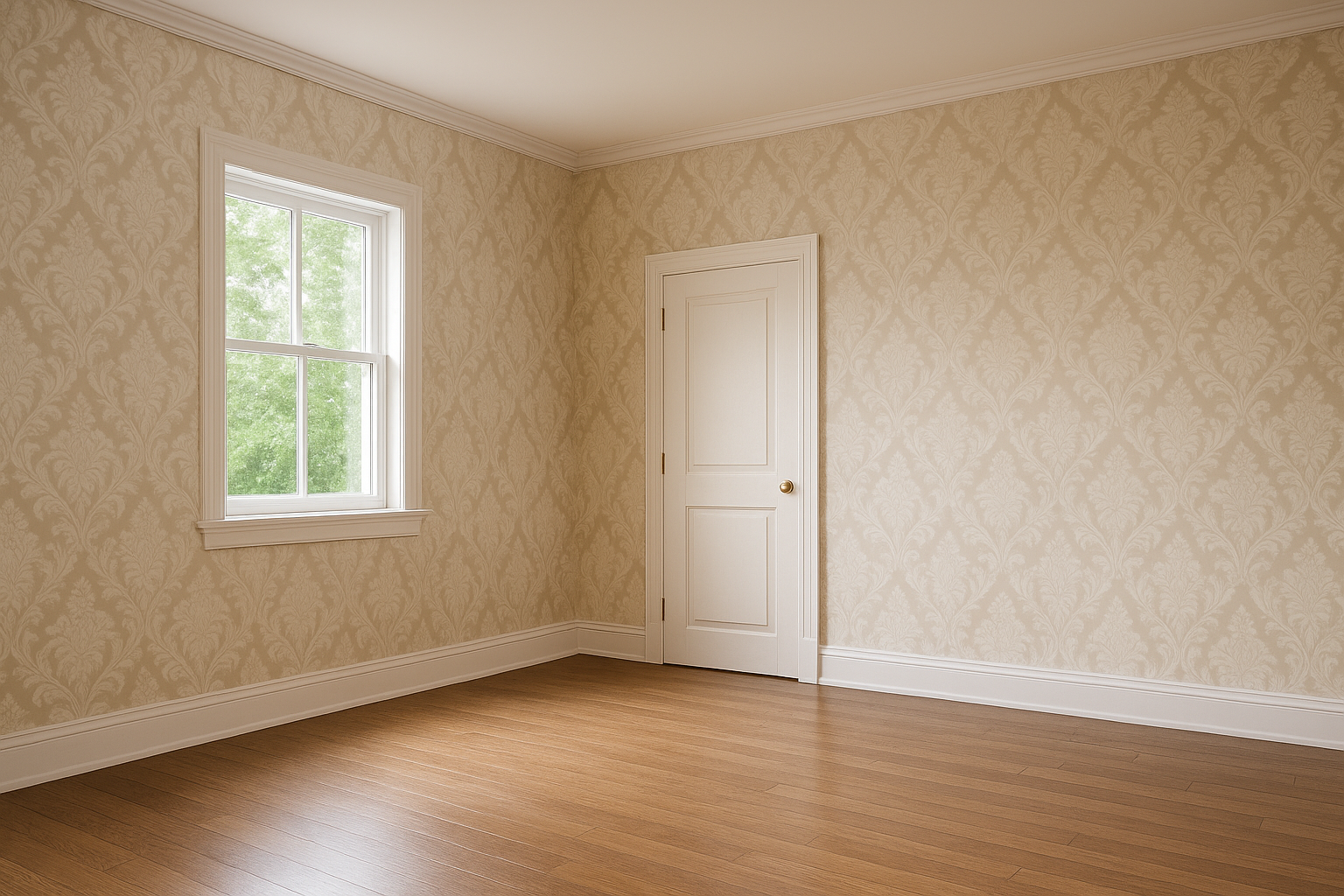
Start By Understanding Which Wallpaper Can Be Painted
Not every wallpaper behaves the same once primer hits it. Before learning how to paint over wallpaper, it helps to know what you’re working with. Some wallpaper accepts paint smoothly while others react poorly.
Wallpaper That Usually Paints Well
- Standard paper wallpaper
- Older vinyl-coated wallpaper
- Wallpaper with tight seams
- Smooth, non-textured surfaces
These types of wallpaper stay stable when sealed with primer. They don’t curl or bubble as easily.
Wallpaper That Should Not Be Painted
- Fabric-backed vinyl
- Peel-and-stick wallpaper
- Heavy, raised textures
- Slick vinyl that repels adhesion
If you’re unsure, a small hidden test spot can help. Texture and adhesion matter more than age or pattern when deciding the right approach.
Why Condition And Cleanliness Matter Before Painting
A lot of homeowners are surprised by how much surface grime affects the final finish. Knowing how to paint over wallpaper starts with understanding what needs to be removed before any products are applied.
Wallpaper can hold more dust, kitchen residue, and mildew than you think. Celina humidity plays a role too, especially in bathrooms and kitchens. A light cleaning helps the primer bond correctly and prevents discoloration later.
This is the stage where choosing the right sheen really impacts the results. If you want a clearer idea of how different finishes behave, guides like wall paint finishes help you look at durability and appearance side by side.
Fixing Seams, Lifts, And Damaged Spots
Smooth walls don’t happen by accident. Wallpaper seams almost always need attention, especially if you want the surface to look like it was never wallpapered in the first place.
How Painters Prepare Seams:
- Cut away loose edges
- Apply fiberglass joint tape across seams
- Add a thin layer of drywall compound
- Sand gently with a pole sander
- Wipe dust with a clean cloth
Each step supports the next. Even small ridges can show through lighter paint shades. This is where painters put extra time, because once the finish coat goes on, nothing can hide a raised seam.
If you’re choosing new wall colors at this stage, tools that help you visualize tones like best wall colors or checking how shades shift on a wall using topics like does paint dry darker or lighter can help you avoid regrets later.
Primer Makes All The Difference
The primer used on wallpaper can’t be chosen randomly. This step determines whether the wallpaper stays sealed or starts to bubble.
Water activates old adhesive. That means water-based primer often loosens wallpaper. Oil-based primer locks everything down, seals old glue, and creates a surface that accepts new paint.
Primer benefits:
- Blocks stains
- Helps adhesion
- Prevents bubbling
- Smooths the surface tone
It also prepares the wall to accept the first coat of paint evenly. If you’re picky about texture and smooth finishes, this step is what helps achieve the look explained in guides like how to get the smooth paint finish.
Painting Over Wallpaper For A Clean, Modern Look
Once the primer dries, the fun part finally starts. This is when you see how the room will transform.
Painters use a brush for the edges and a roller for the wide areas. They work in sections so the finish stays even. A second coat is almost always needed to get the color depth right.
What Influences The Final Look:
- Room lighting
- Sheen level
- Existing wallpaper texture
- Quality of roller cover
Celina homes often have bright natural light, which makes every surface detail easy to spot. Because of that, prep is just as important as the paint itself.
Common Issues Painters See In Celina, TX Homes
Homes around Celina vary widely in age and wallpaper type. Some have a single layer. Others have multiple layers applied over decades. Each situation needs a different plan.
Issues Painters Encounter:
- Wallpaper applied directly to bare drywall
- Uneven seams from old installation methods
- Textured wallpaper needing skim coating
- Sun-faded areas behind large furniture
- Old adhesive bleeding through
Addressing these details early keeps the paint finish looking uniform later. It’s not unusual for homes in this area to need extra prep because local builders used a variety of wall materials over the years.
Choosing Colors And Finishes That Work With Wallpaper
Once the prep is done, color selection becomes the fun part. But not all colors behave the same over wallpaper. Some highlight imperfections more easily. Some look richer with two coats. Some change dramatically as they dry.
If you’re still deciding on shades, tools like paint color visualizers can help you picture options without guessing. This avoids choosing colors that look one way in the store and completely different in your home.
Final Thoughts On Painting Over Wallpaper In Celina, TX
Painting over wallpaper is one of the cleanest ways to refresh a room when you understand the right steps. Once you learn how to paint over wallpaper, you start seeing how much prep goes into getting a smooth, even finish. The right primer, seam repair, color choice, and paint application all play equal parts in the final result. This is why the process matters just as much as the product. A properly painted wallpaper surface can look brand new and hold up for years.
Here is how Highland Painting handles the job from start to finish:
- Careful inspection of wallpaper and wall condition
- Cleaning and surface prep to support adhesion
- Seam repair and smoothing
- Primer application for stability and stain blocking
- Two-coat paint system for complete coverage
- Final detail check for quality
If your home is in Irving, North Richland Hills, Lewisville and the surrounding areas, we’d be happy to help you transform your space.
Call 469-642-0972 for a FREE estimate.